lunedì 12 ottobre 2009

Social policies


Our country has virtually no line of social politics. Disability for our institutions is a pathologically incurable state and so it’s easy to see that with a condition which is seen as having no potential, there’s no sense in supporting programs which aim to safeguard the rights and dignity of these “weak” people, in particular the disabled. This improper attitude has unfortunately become a hallmark of our beautiful country.
It’s very sad that this reality leads me to think that the ONU convention didn’t serve any purpose because if on one side it calls for rights for the disabled, on the other it evidences the contradictions which exist in reality.

This state comes from an awareness that in this field, wrong decisions are frequently made which testify yet again the cynicism and distraction of those institutions which should represent everyone, but which through their cultural short sightedness neglect the rights and offend the dignity of over 5 million people.

Think of the cuts in the social funds made over the past three years thanks to which we have passed from 953 million assigned to the disabled in 2007 to 517 million this year 2009. This figure furthermore has only been used by 50%. This is what many administrators have denounced and why many of them didn’t attend the State-Regions Conference. This will cause a further delay in putting into act those operations which are indispensable to improve the quality of life for the disabled (and not just for them). Think of the LEA, but above all of the tariff list, the instrument by which the national health service provides wheelchairs and artificial limbs which is totally out of date.

Think also of the block of the compulsory collocation of the disabled in the Public Administration, included in the Ministry of the Treasury’s anti-crisis decree which undermines the correct actuation of Law 68 of 1999, which is already not respected by corporations who prefer to pay ridiculously small fines if and when a check on the obligatory collocation is carried out.
The commissions which carry out these checks aren’t present all over Italy so the funds which come from these fines, funds which the law decrees should be used for professional training, for the purchase of appliances and prostheses, and for the breaking down of architectural barriers in homes, are always scarcer. And as if that wasn’t enough, there’s a total disinterest regarding the inclusion of disabled people by the unions, who tend to be .... distracted.

Despite all this I’m optimistic. I need to be for the future. During the past three years, I’ve travelled around Italy then around Europe and I’ve met extraordinary people who have always worked towards a society which is capable of safeguarding everyone’s needs.

Salvatore Cimmino

mercoledì 30 settembre 2009

For a World without Borders and without Barriers


xxxxxxxxxxxxxxxxxxxxxxxxxxxxxxxxxxxxxxxxxxxxxxxxxxxxxxxxxxxxxxxxxxxxxxxxx

Rome, 28th September 2009

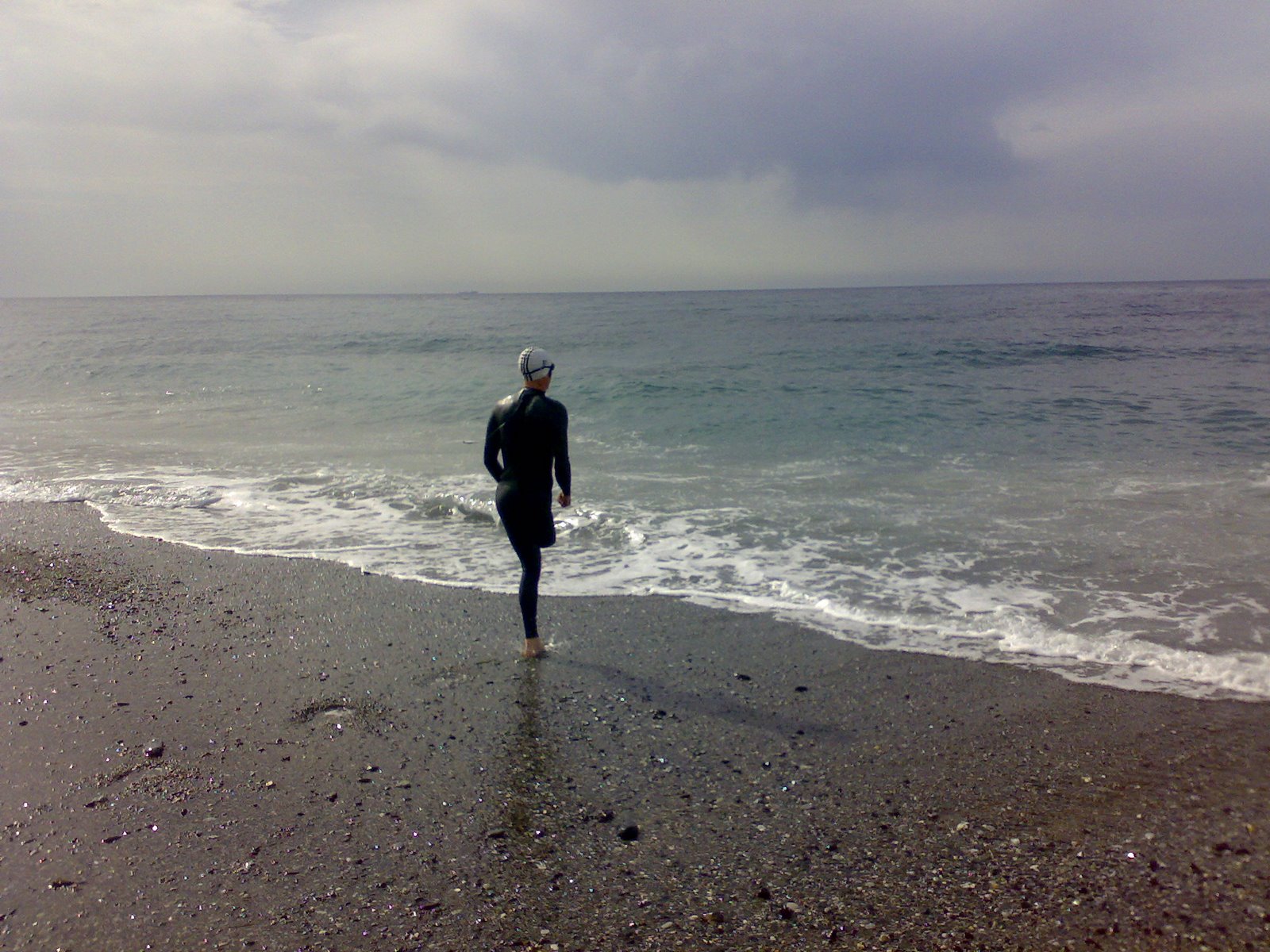
Yesterday, 27th September, I concluded an extraordinary experience which took me around Europe for five months. If I think of the time in which I was planning this project, I feel as if I have lived a dream come true. The dream wasn’t that I successfully concluded a tough, but not impossible challenge, but in the results I achieved from a human point o view.
During these five months, I’ve discovered some very special people, full of enthusiasm and true testimonials of the word solidarity. To find friends with whom to share a project is already in some ways a victory and at this moment I feel I am a winner! It’s in Sport, in this healthy and marvellous environment, that for the first time I understood that diversity can be an added value.
The reasons which brought me to attempt such a challenge, starting with my physical disability, are an attempt to break down architectural barriers, and above all social/mental barriers, to ensure respect and dignity and the right to liberty and autonomy for disabled people, so that we feel fully integrated in society.
In Italy there are over 5 million people with physical disabilities with 17,000 new cases each year, an average of around 47 people every day. Important numbers, but very few people are aware of them. Numbers which of course, describe disability as a problem to fight and prevent, but above all as a situation which needs to be recognized as normal in society. This requires services which must be continually improved and modernized, and technological innovation which will help disabled people to live better lives, a dream which is still much too far away from the reality of many.
In particular, given my specific disability, I’m fighting for a precise objective, that the current national agreement for the distribution of prostheses and wheelchairs be updated. This document dates back to 1992. During the past 17 years, scientific research has taken giant strides. It’s evident that the list is dated and obsolete and doesn’t take into account new technology, obliging disabled people to use old equipment which is reimbursed by the national health service or to undertake the difference in expense on their own in order to obtain the more technologically advanced equipment which is available on the market. Likewise, the list doesn’t contemplate reimbursement for prosthesis and wheelchairs which are regularly supplied by the respective national health services of other European countries.
Technological progress today can offer an enormous benefit to the five million Italian disabled people. A study by the Bocconi University in Milan in 2004 showed that the latest prostheses can offer a huge improvement to the quality of life, at the same price as the older outdated models which are offered by the Italian national health service.
As long as the national health service continues to think only of saving money, providing budgets which are totally incongruent with reality, Italian disabled people will have to pay off their own backs for choices which are made for apparent short term savings with respect to an investment which if higher in the beginning would give rise to lower social and sanitary costs in the years to come.
This is my battle, these are the reasons which pushed me to take up the swimming Tour of Italy challenge first, and then the Tour of Europe for a world without barriers or frontiers, to encourage institutions to wake up and look around, and to show that sport, swimming in particular, can be a strong ally in helping the life of the disabled.
Yesterday I swam 34 km in a marvellous sea. I crossed three states, starting in Croatia from the Port of Salvore, passing by the magnificent coast of Slovenia and arriving in a beautiful village called Muggia at the local sailing club. It wasn’t easy by any means. Sometimes there was a strong wind (the Borina), sometimes there were waves which made the crossing more difficult, but thanks to the warm encouragement I had throughout from the boats which accompanied me, and thanks to the presence of Filippo Tassara, Luca Baldini, Luciano Martinuzzi and the cheers of Barbara Pozar, I concluded the crossing in nine hours. We left Port Salvore at 8.45 am and reached Muggia at 5,30 pm.
Before starting, I was received by the Mayor of Umago, Vili Bassanese, the Deputy Mayor Veljko Ivančić and the counsellor for social activities in Umago, Dimitrij Sušanj. Also at the meeting were the President of Panathlon Giuseppe Donno, Barbara Pozar, the Deputy President of Triestina Nuoto, Alberto Scherani, the Deputy Mayor of Capodistria, Sergio Lupieri, The Regional Counsellor for Friuli Venezia Giulia, Nerio Nesladek, Mayor of Muggia and Walter Godina, Deputy President of the Province of Trieste, who was the artefice of what proved to be a day which will be unforgettable for all those who took part.
On arrival I was welcomed by hundreds of people spreading along the coastal road up to the Sailing club, which was full of celebrating crowds and the unmistakable voice of Franco Bloccari, Deputy President of CONI Trieste, who animated the crowds until my arrival.
At around two miles from my destination, I was delighted by the presence of tens of boats, including those of the Carabinieri, the Police, the Mayor of Muggia Nerio Nesladek, of Sergio Lupieri, Regional counsellor, and of tens of canoes paddled by students from the Collegio Adriatico del Mondo Unito and children in Optimist sailing boats from the club, as well as fellow swimmers young and older from Triestina Nuoto.
Such participation and spontaneous warmth not only filled me with joy, but I am sure that it will help to achieve the final objective which I have set myself and which many of us are now striving to achieve.
It wasn’t easy to plan and undertake this project which would not have come about without the support of the Circolo Canottieri Aniene, Fondazione Roma and Italbrokers. For this I thank President Giovanni Malagò, Presidente Emmanuele Emanuele and Stefano Giovannini, for their faith in me which fills me with pride and strength.

Thank you.

Salvatore Cimmino

lunedì 28 settembre 2009

Per un Mondo seza Barriere e senza Frontiere


Roma, 27 settembre 2009


Ieri, 27 settembre 2009, ho concluso un’ esperienza straordinaria che mi ha portato per cinque mesi in giro per l’ Europa. se ripenso ai momenti in cui costruivo questo progetto, ho come la sensazione di aver vissuto un sogno. E il sogno, realizzato, non sta nell’ aver portato a termine un impresa certamente faticosa ma comunque non impossibile, sta nel risultato raggiunto in termini umani.
In questo periodo ho scoperto persone speciali, piene di entusiasmo e testimoni reali della parola solidarietà. Trovare amici con cui poter condividere un progetto costituisce già, di per sé una vittoria, e in questo momento io mi sento un vincitore. Ed’ è nello sport, in questo ambiente sano e meraviglioso, che per la prima volta ho capito che la diversità può e deve rappresentare un valore.
Le motivazioni che mi hanno spinto a programmare una tale impresa, partendo dalla mia condizione di disabile motorio, sono l’ abbattimento delle barriere architettoniche ma anche e soprattutto delle mentali, per riuscire a garantire il pieno rispetto della dignità umana e dei diritti di libertà e di autonomia delle persone disabili, al fine di promuoverne la piena integrazione nella società.
In Italia ci sono oltre 5 milioni di disabili motori, con 17000 nuovi casi ogni anno, praticamente una media di 47 persone al giorno. Numeri importanti, eppure spesso sconosciuti alla gente. Cifre che certamente descrivono l’invalidità come male da combattere e prevenire ma anche e soprattutto come situazione da normalizzare nella società. Tutto ciò ha bisogno di servizi sempre più adeguati e all’avanguardia, di innovazione tecnologica che permetta ai disabili di vivere una vita migliore, per molti ancora troppo lontana purtroppo da quella che sono costretti a vivere.
In modo particolare, vista la mia specifica disabilità, mi batto per un obiettivo preciso: la modifica del Nomenclatore tariffario delle protesi e degli ausili. Questo documento risale al 1992: nel corso di questi anni la ricerca scientifica, però, ha fatto passi da gigante. È evidente, dunque, che si tratti ormai di uno strumento datato ed obsoleto, che non tiene conto dell’innovazione tecnologica obbligando i disabili ad utilizzare i vecchi presidi rimborsati dal Servizio Sanitario Nazionale o a farsi carico della differenza di costo con quelli tecnologicamente più avanzati disponibili sul mercato. In altri casi, inoltre, non contempla la possibilità di rimborso per protesi ed ausili che, invece, in altri paesi europei vengono regolarmente forniti tramite i rispettivi Servizi Sanitari Nazionali. Il progresso tecnologico oggi è in grado di offrire un evidente beneficio ai cinque milioni di disabili italiani, come peraltro rilevato da uno studio dell’ Università Bocconi di Milano del 2004, secondo il quale, a parità di costo, le protesi di ultima generazione sono in grado di offrire una evidente miglioramento della qualità della vita.
Finché il Servizio Sanitario Nazionale continuerà ad essere poco previdente, preferendo percorrere la via del risparmio, prevedendo budget di spesa incongruenti con la realtà, i disabili italiani dovranno pagare sulla propria pelle il prezzo di scelte che privilegiano il risparmio immediato ed apparente rispetto ad un investimento che, seppur nell’immediato più alto, permetterebbe poi minori costi sociali e sanitari negli anni successivi.
Questa è la mia battaglia, queste le motivazioni che mi hanno spinto a portare avanti il Giro d’Italia prima ed il giro d’ Europa a Nuoto poi, per un mondo senza barriere e senza frontiere, per sollecitare le Istituzioni e per dimostrare a tutti che lo sport, il nuoto in particolare, può essere un forte alleato per facilitare la vita dei disabili.
Ieri ho percorso 34 km in uno specchio d’ acqua meraviglioso. Ho attraversato tre stati, sono partito dalla Croazia, dal porto di Salvore, passando per la magnifica costa Slovena, per arrivare in un incantevole villaggio di nome Muggia, al Circolo della Vela. Non è stato facile, a tratti la borina, a tratti l’ increspamento del mare hanno reso la traversata difficoltosa, ma grazie al calore ed all’ incoraggiamento che ho avuto per tutto il percorso dalle barche che mi accompagnavano, e grazie alla presenza di Filippo Tassara, Luca Baldini, Luciano Martinuzzi e al tifo sfegatato di Barbara Pozar, ho potuto concludere la tappa in circa nove ore: siamo partiti alle 8h45 dal Porto di Salvore, siamo arrivati a Muggia alle 17h30.
Alla partenza sono stato ricevuto dal Sindaco di Umago Vili Bassanese, dal vice sindaco Veljko Ivančić e dall’ assessore alle attività sociali di Umago Dimitrij Sušanj. All’ incontro sono intervenuti: il presidente del Panathlon Giuseppe Donno, Barbara Pozar, Vice presidente della Triestina nuoto, Alberto Scherani, vice sindaco di Capodistria, Sergio Lupieri, Consigliere regionale del Friuli Venezia Giulia, Nerio Nesladek, Sindaco di Muggia e Walter Godina, Vice Presidente della Provincia di Trieste, a tutti gli effetti il regista di quella che si è rivelata una giornata che rimarrà indelebile nel cuore di quanti hanno partecipato.
All’ arrivo sono stato accolto da centinaia di persone assiepate lungo la strada che costeggia il mare fino al Circolo della Vela, gremita da altrettante persone festanti, e dall’ inconfondibile voce di Franco Bloccari, vice presidente del CONI di Trieste, che ha animato tutti i presenti fino al mio arrivo. A circa 2 miglia dall’ arrivo sono stato piacevolmente sorpreso dalla presenza di decine di imbarcazioni, tra cui quella dei Carabinieri, della Polizia di Stato, del Sindaco di Muggia Nerio Nesladek, di Sergio Lupieri, Consigliere Regionale, e da decine di canoe guidate dagli studenti del Collegio Adriatico del Mondo Unito. La partecipazione, la condivisione, il calore spontaneo che mi hanno trasmesso non solo mi ha commosso, ma sono sicuro che contruibuirà ad avvicinarmi all’obiettivo che mi sono posto e per il quale ormai siamo veramente in tanti a combattere.
Non è stato facile organizzare e realizzare questo progetto che non avrebbe mai visto la luce senza l’apporto, determinante e decisivo, del Circolo Canottieri Aniene, della Fondazione Roma e dell’ Italbrokers. Per questo oggi ringrazio il Presidente Malagò, il Presidente Emanuele e Stefano Giovannini, la fiducia che hanno voluto accordarmi mi riempie di orgoglio e di forza.

Grazie

Con Affetto
Salvatore Cimmino